Everyone has played with a partner who struggles. Maybe they miss routine volleys. Maybe they get targeted all game. Maybe you leave the court thinking there was not much you could do.
Actually there was.
The best doubles players do not just focus on their own game. They make the game easier for the person standing beside them. Here are five habits worth looking at.
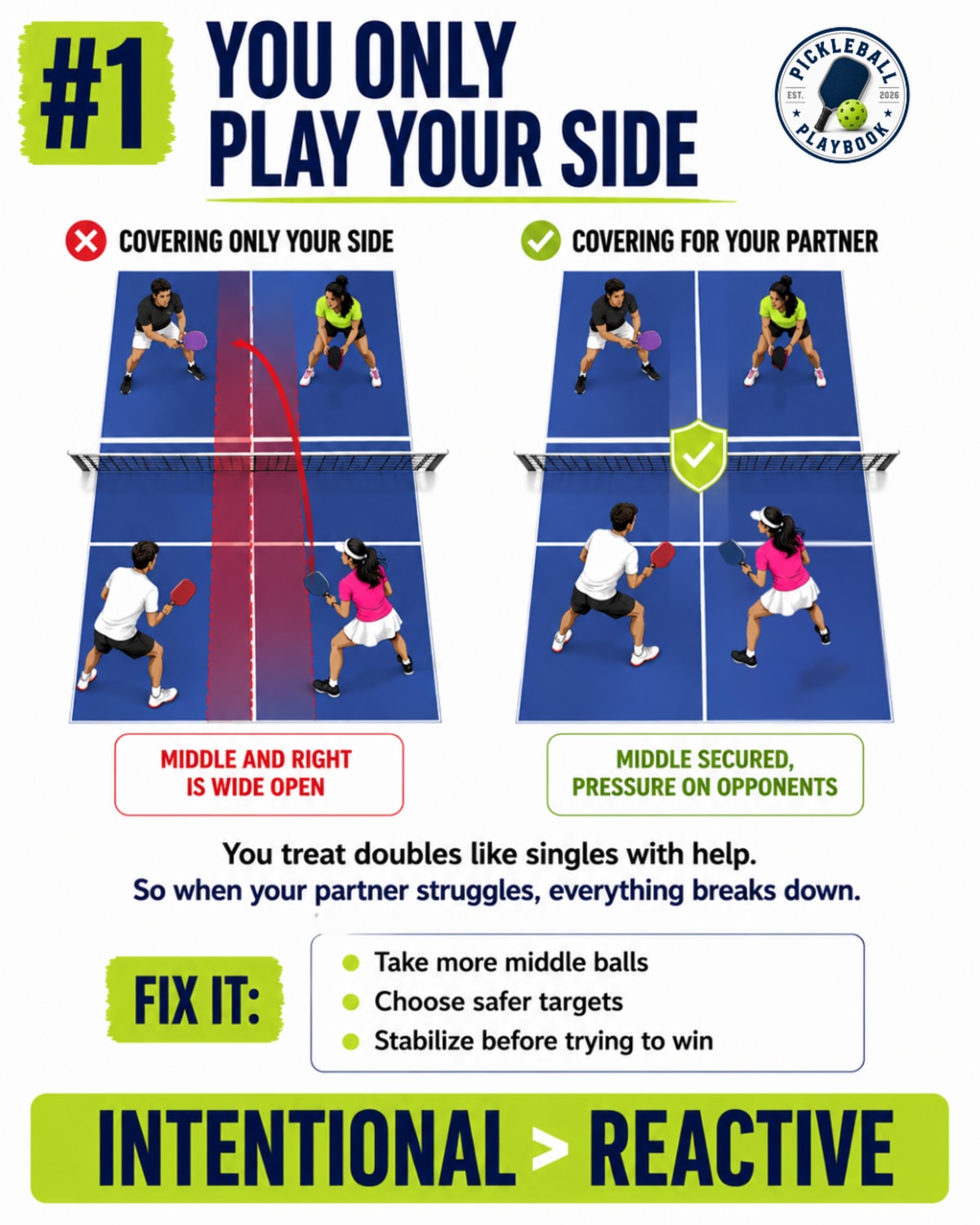
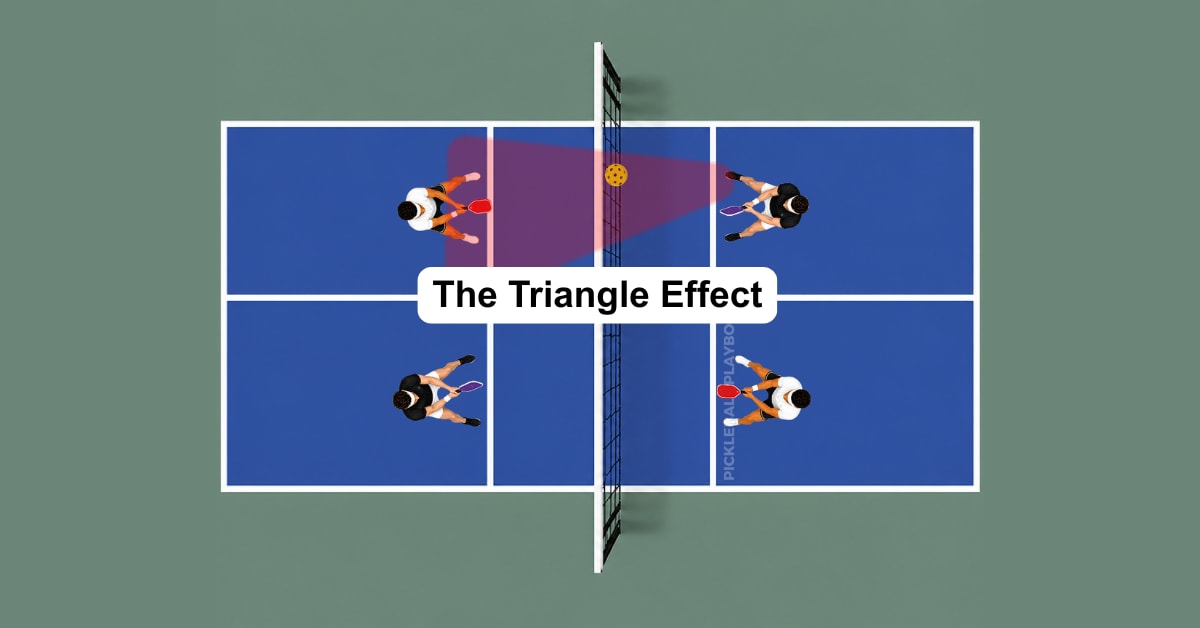
You Only Play Your Side
If your opponents keep targeting your partner, do not just stand on your half waiting. Help in the middle, cover a little more space when needed, and make it harder for your opponents to keep picking on your teammate.
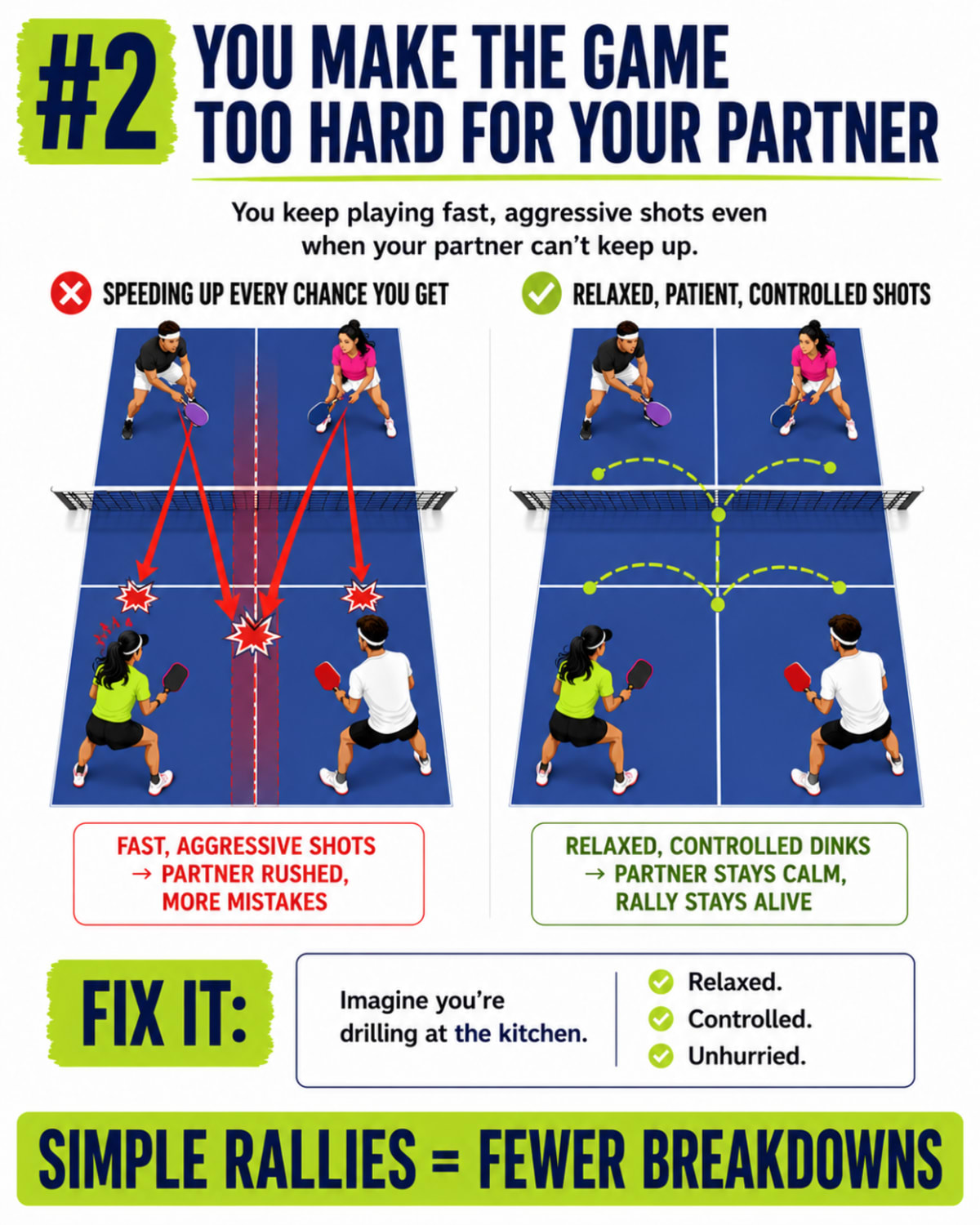
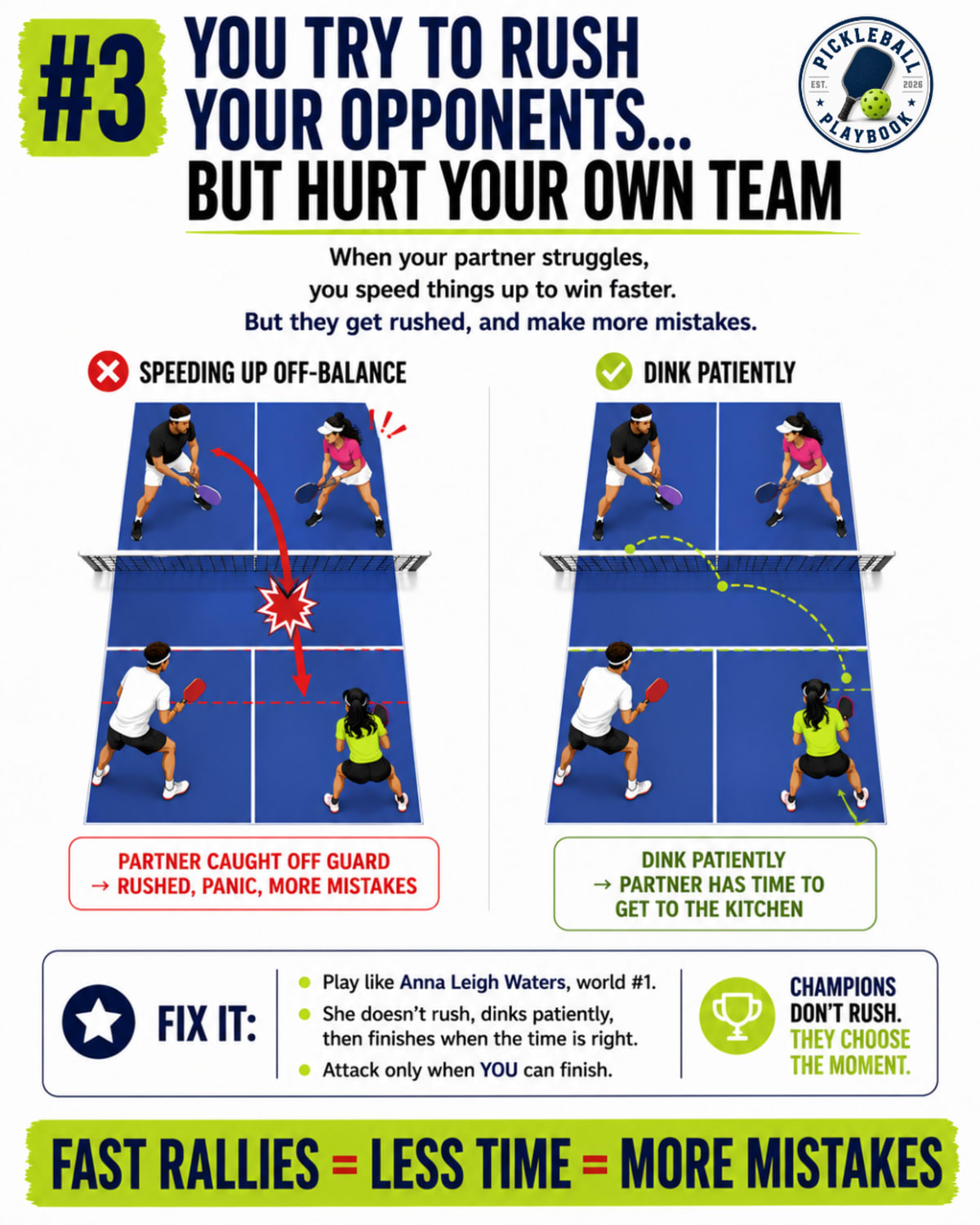
You Speed Everything Up
Fast rallies do not just pressure your opponents. They pressure your partner too. If your teammate is not comfortable in hand battles, slow the game down with dinks and resets until your team is in a better position to attack.
You Attack Too Early
Just because you can speed up a ball does not mean you should. If your partner is still moving to the kitchen or recovering from the last shot, be patient. Wait until both of you are ready before trying to finish the point.
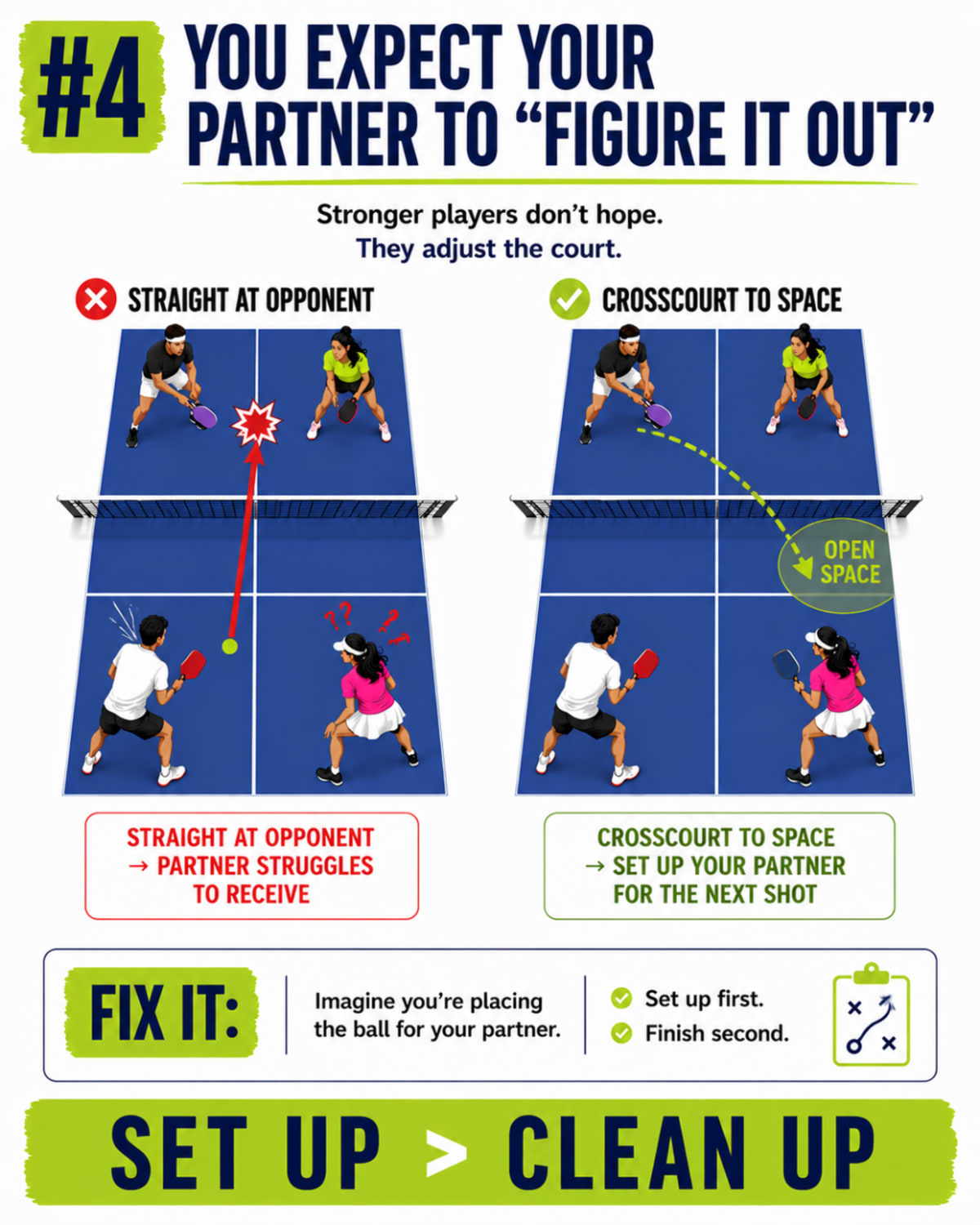
You Expect Your Partner to Figure It Out
Instead of going for a winner every rally, think about setting your teammate up. A well-placed dink or controlled shot often creates an easier ball for your partner than another hard drive does.
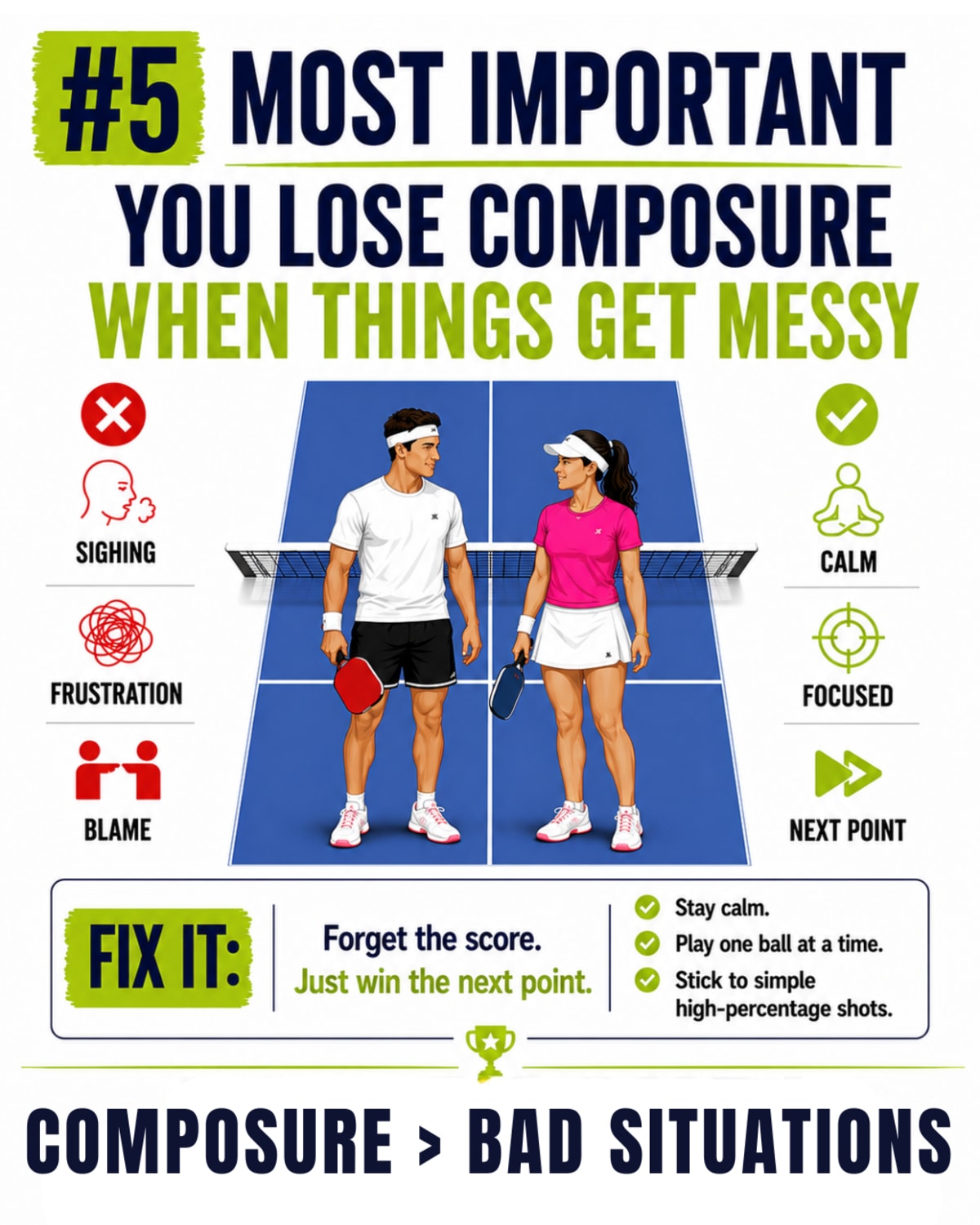
You Show Your Frustration
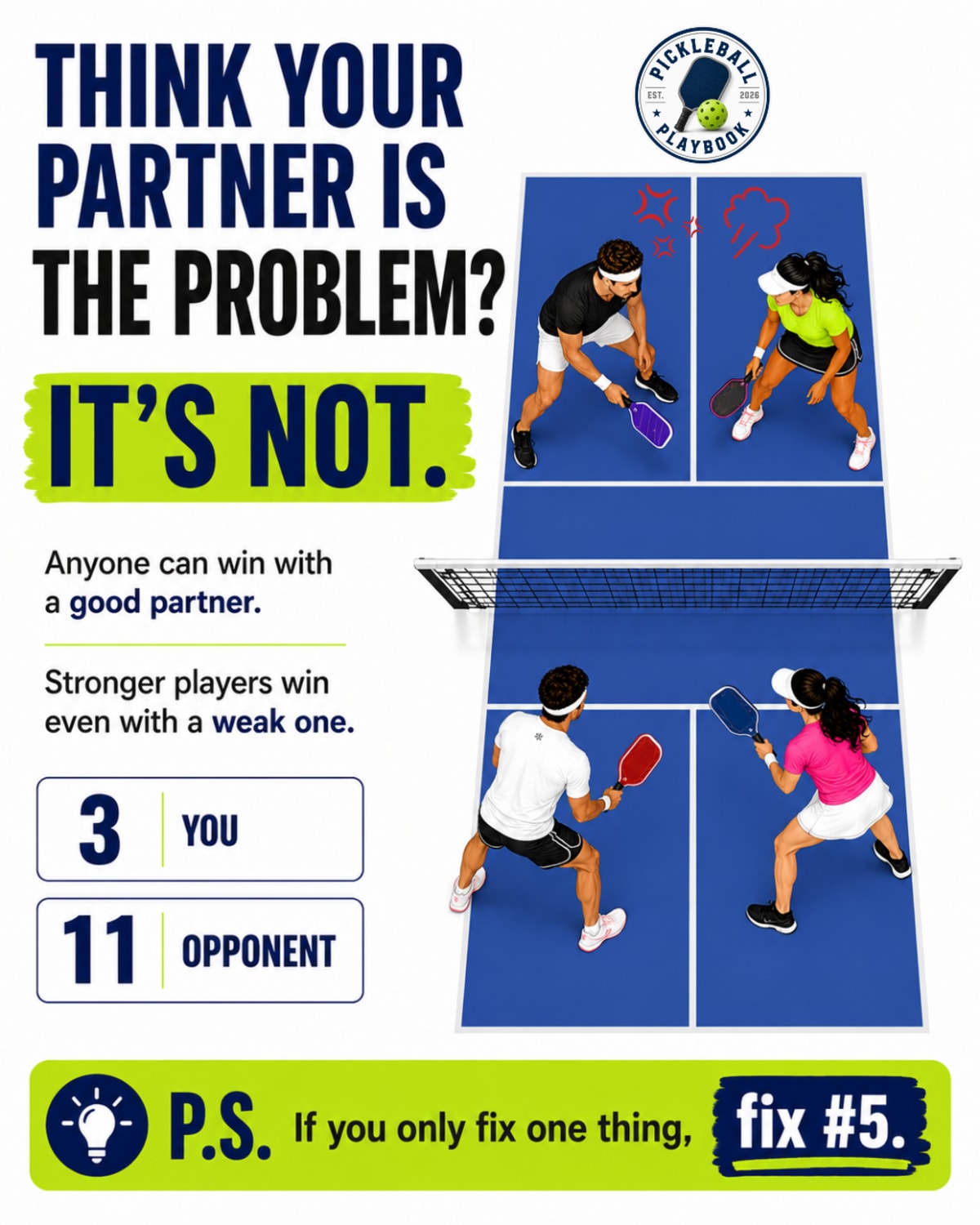
Your partner notices everything. A sigh, a head shake, or negative body language hurts their confidence more than a missed shot ever will. Stay positive and focus on the next point.
Doubles is not about finding the best player on the court. It is about becoming the best team. The next time you are paired with someone having an off day, do not ask how you are going to carry them. Ask how you can make the game easier for both of you. You might be surprised how often that changes the outcome.