A lot of beginners show up to their first game not knowing anything about the court they are playing on. That is fine. But once you understand the layout, the game starts making a lot more sense. You will know where to stand, what counts as in or out, and why certain zones exist in the first place.
Let's break it all down.
The Court Size
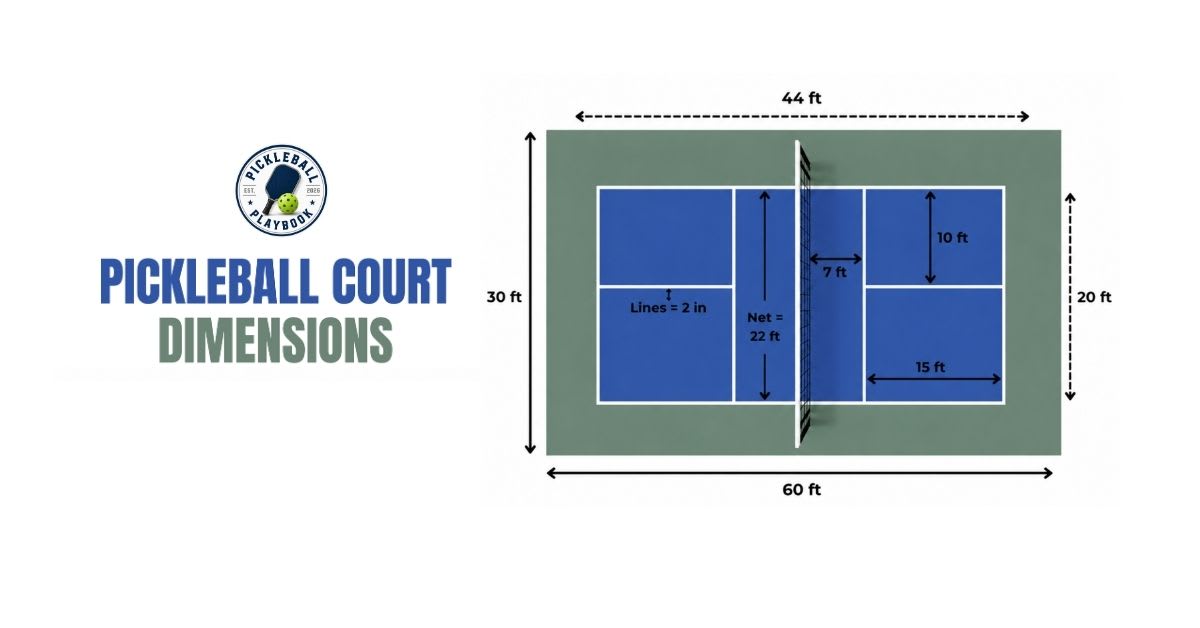
The official pickleball court is a rectangle measuring 20 feet wide and 44 feet long. That applies to both singles and doubles. Unlike tennis, the court size is the same for both formats. You do not add or remove space depending on how many people are on the court.
To put it in perspective, the court's compact footprint is roughly a quarter the size of a tennis court. That smaller size is a big part of why pickleball is so fun and fast-paced. Everything happens quickly because the court keeps players close to the action.
All court lines are 2 inches wide and should be a color that clearly contrasts with the playing surface. And here is something worth knowing early: if the ball lands on any line, it is in. The line counts as part of the court.
The Kitchen (Non-Volley Zone)
The non-volley zone, or kitchen, measures 7 feet deep by 20 feet wide on each side of the net. So from the net, 7 feet back on both sides is the kitchen. That is the zone where you cannot volley the ball.
The kitchen line itself is part of the non-volley zone. If you are touching that line when you volley, that is a fault. Step back just behind it and you are fine.
The Service Boxes
Behind the kitchen on each side of the court are the service boxes. Each service box measures 15 feet long by 10 feet wide on each side of the centerline. The centerline divides the two service boxes on each side, running from the kitchen line back to the baseline.
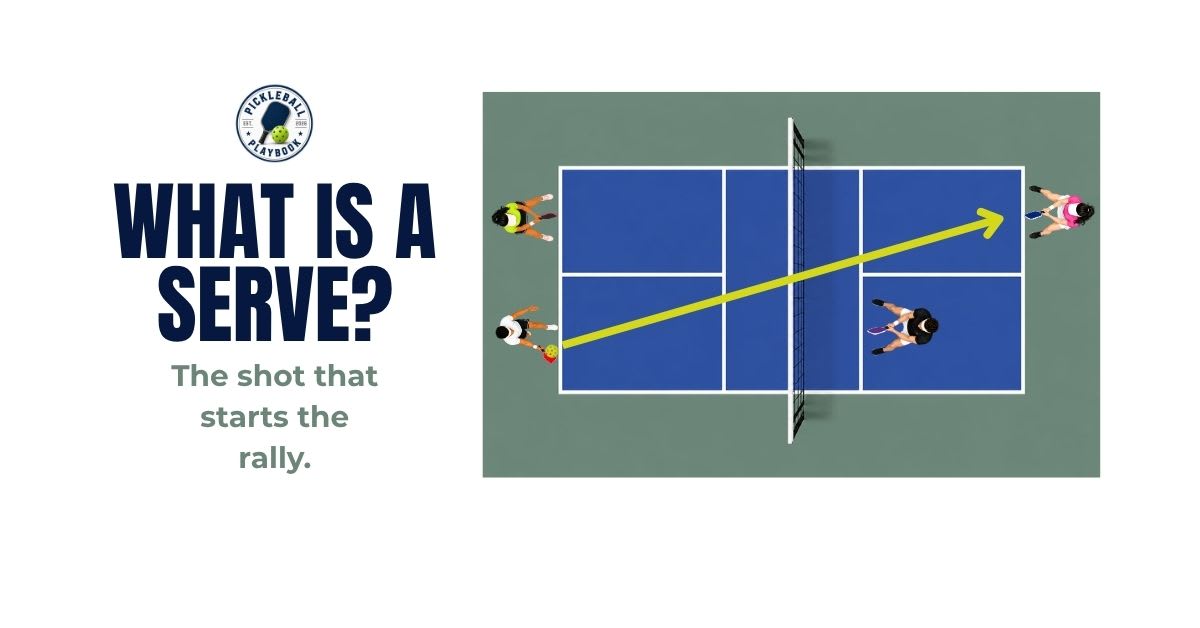
When you serve, you hit diagonally from behind your baseline into the opposite service box across the net. The serve has to clear the kitchen and land inside that diagonal box or it is a fault.
The Net
The pickleball net spans 22 feet from post to post, with each post sitting 1 foot outside each sideline. The net itself measures 36 inches high at the sidelines and 34 inches high at the center, which creates a slight dip in the middle.
That 2-inch difference matters more than it sounds. The lower center of the net is why most players aim their shots through the middle rather than down the line. The middle gives you more clearance and less risk of hitting the tape.
Total Space You Actually Need
The court itself is 20 by 44 feet, but you need more room than that to actually play safely. The minimum playing surface area recommended is 30 feet wide and 60 feet long. For tournament play, USA Pickleball recommends 34 feet wide by 64 feet long, offering extra room for aggressive play and reducing collision risks.
If you are setting up a backyard court or converting a tennis court, plan for that extra space. Running down a lob or chasing a wide ball into a fence is not fun.
Quick Reference
- Court size: 20 ft wide × 44 ft long
- Kitchen depth: 7 ft from the net on each side
- Service box: 15 ft long × 10 ft wide per box
- Net post spacing: 22 ft apart
- Net height at sidelines: 36 inches
- Net height at center: 34 inches
- Line width: 2 inches
- Minimum total playing area: 30 ft wide × 60 ft long
- Recommended total playing area: 34 ft wide × 64 ft long
Knowing the court layout does not just help you follow the rules. It helps you understand why shots land where they do, where you should be standing at any given moment, and how to use the court to your advantage.
Now you know exactly what you are working with.